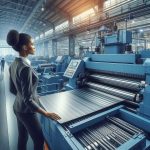


Modern fabrication floors no longer run at the slow, predictable rhythm they once had. The pace has changed, expectations have sharpened, and the tolerance for inaccurate bends has dropped to almost nothing. A sheet that lands one degree off today doesn’t just ruin a part; it disrupts the flow of an entire production cycle. That is exactly where CNC press brake machines have taken center stage—quietly at first, then firmly, until workshops that once relied on manual brakes started feeling the pressure to adapt or lag behind.
There is a noticeable shift in how metal bending shops operate now. Jobs move faster, designs come with tighter corners, and every batch demands identical pieces without excuses. Outdated bending setups struggle under this pressure. Mechanical brakes fight back with their limitations, and the gaps become painfully visible during multi-bend, multi-profile jobs. CNC technology has stepped in not as a convenience but as a backbone for delivering what the market now treats as the bare minimum.
The Rise of Precision-Led Fabrication
Precision isn’t a luxury anymore. It’s the baseline. Workshops handling automotive brackets, machine enclosures, heavy equipment panels, or architectural metalwork are expected to deliver parts that fit perfectly without endless grinding or adjustment. Even a slight misalignment ripples through downstream processes.
CNC press brakes cut through this problem by turning bending into a defined, predictable operation. Instead of workers gauging angles by eye or relying on years of muscle memory, every bend follows a programmed path. The machine knows the stroke depth, the angle, the springback, and the material variation before the metal even touches the die. That stability is what modern workshops lean on when the order book looks nothing like the slow-paced past.
The moment a shop partners with a NC Press Brake india that understands these pressures, the improvement becomes noticeable from the very first production batch.
Speed That Matches Today’s Workflows
Walk into any busy workshop and the pattern is easy to see. Multiple jobs on the floor. Frequent design changes. Shorter lead times. A deadline-friendly environment that leaves no space for slow setups. Traditional brakes slow everything down. Measuring, adjusting, re-measuring—it eats precious minutes that add up through the day.
CNC machines flip this script. Job memory stores previous programs. New setups take minutes. Bend sequences load instantly. The operator places the sheet, hits start, and the press brake moves through the entire cycle without hesitation. This single shift—from manual calibration to automated flow—removes the bottlenecks that used to choke production during busy schedules.
For workshops that depend on consistency and speed, the choice of a reliable CNC press brake machine manufacturer shapes the overall throughput far more than most managers realize at first.
Material Savings and Cleaner Batches
Metal prices aren’t forgiving. Whether it is mild steel, stainless, aluminum, or anything in between, wastage has become a silent profit killer. One wrong bend on a large sheet can wipe out the margin of a small batch. CNC systems minimize such losses with real-time angle checks, automatic crowning, and sheet-thickness compensation that keeps bends accurate from the first piece onward.
This accuracy hits the bottom line directly. Scrap reduces. Rework becomes rare. Consistency improves in a way manual setups simply cannot match, especially when multiple shifts work on the same project. The machine carries the discipline. The operator ensures flow. The result is cleaner batches that move straight to assembly without extra inspection cycles.
A strong CNC press brake machine manufacturer doesn’t just sell a machine; it gives workshops a way to preserve profit per sheet, something older systems struggle to protect.
Flexibility to Handle Modern Design Demands
Product design cycles are shorter now. Clients request rapid changes. Prototypes become production rushed into the same week. Mixed-batch manufacturing has slowly become a norm instead of an exception.
CNC press brakes handle this world easily. Complex designs with sequential bends, varying thickness, or custom radii no longer cause delays. The bending program handles the order of operations, while the operator moves from one job to another without stopping to re-engineer the setup. This flexibility opens doors to new project types that workshops once rejected because the recalibration time was too expensive to justify.
In a landscape where design agility matters as much as strength or durability, a workshop’s long-term capacity is tied directly to the capabilities delivered by its CNC press brake machine manufacturer.
Reducing Skill Dependency in a Shrinking Labor Pool
The fabrication workforce has been changing. Experienced press brake operators who spent decades mastering angles and compensating by instinct are becoming harder to find. Younger workers step in, but manual brakes demand a learning curve that doesn’t fit modern timelines.
CNC systems bridge this gap. It takes care of all the complex calculations, while the operator follows a pretty straightforward workflow. No more years of trial and error, and instead just a few weeks of structured training and you’re good to go – producing consistent, reliable bends every time. This reduces dependency on rare specialists and stabilizes workshop performance across shifts and staffing fluctuations.
This is also why workshops evaluate the support, documentation, and training abilities of a CNC press brake machine manufacturer as seriously as they evaluate tonnage or stroke specs.
Building Workflows That Can Scale Without Breaking
A modern workshop isn’t judged only by today’s output. It is judged by how well it can scale when the demand curve spikes. Outdated bending setups make scaling painful. Production teams spread thin. Mistakes increase. Delays become common, and quality variations slip through during rush orders.
CNC press brakes eliminate much of this friction. As workload increases, the machine maintains angle consistency, speed, and repeatability. Production managers can slot new jobs into the calendar without second-guessing whether the bending line will handle the pressure. The machine’s stability becomes the workshop’s stability, and that reliability is exactly what growing businesses rely on.
Conclusion
CNC press brake machines have moved from being an upgrade to becoming a necessity because modern workshops operate under demands that old systems simply cannot handle. The push for accuracy, shorter delivery cycles, low wastage, flexible design handling, and reduced operator dependency has changed the industry from the ground up. CNC-powered bending delivers that stability in the middle of a production environment where every sheet, every bend, and every hour matters.
Workshops that want to stay ahead of the game, stay competitive, and stay scalable now see CNC bending as one of the building blocks – right up there with cutting, welding or finishing. As things evolve and change, who your partner is for your CNC press brake machine is going to have a huge impact on your long-term success – whether that’s being able to stay up and running, or being able to withstand the ups and downs of the industry.