

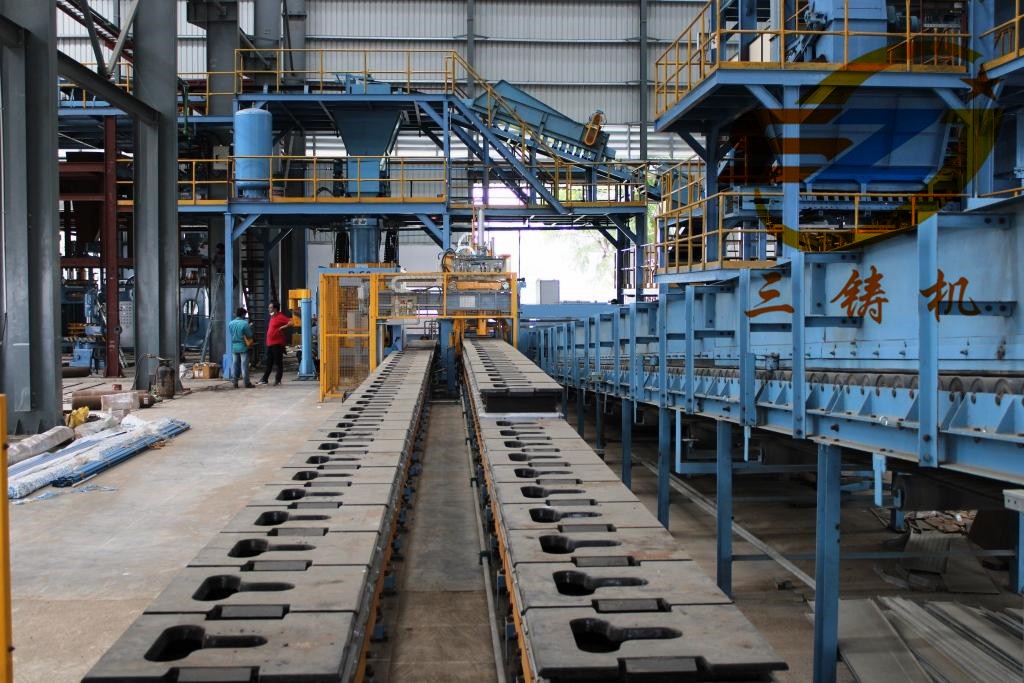
India is a rising regional power in the field of casting, with most buyers getting their metalsmithing-related services from local foundries. India provides a wide range of casting services, from simple valve parts to mill housing, and has lower prices for steel foundries than in Western countries. However, first-time buyers may have trouble choosing between numerous domestic foundries. This article aims to provide a list of criteria based on which a steel foundry India buyer should select a foundry.
Working with a steel foundry India that supplies the buyer with consistently high metallurgy requires due diligence to understand the differentiating factors between these businesses.
Reasons for Interest in Indian Foundries
The main advantage of India in the steel foundry market is obvious – the lower prices due to cheaper labor. However, the Indian foundry industry has been upgrading its infrastructure in the last decade, acquiring induction furnaces and no-bake moulding machines, as well as improving its quality control capabilities with the NABL accreditation. India has access to raw materials due to proximity to domestic sources of iron ore and ferro-alloys.
Moreover, India has a large steel foundry network with many thousand foundries in several industrial centers. This wide pool of suppliers ensures that a buyer can always find another foundry ready to work at a better price.
Steel Foundry Variations
The term steel foundry covers a wide range of products and services offered by Indian foundries. Thus, potential buyers should narrow the search and identify the type of foundry that fits their needs. Indian foundries offer the following steel casting services:
Carbon and low-alloy casting refers to the production of steel parts with various carbon contents and low amounts of alloying elements. This category covers the majority of foundries, as most steel parts do not require special treatment. India offers the best value in carbon and low-alloy casting due to lower prices compared to other countries.
Stainless and high-alloy casting involves the production of corrosion-resistant parts with various steels, such as the range of stainless-steel grades. Fewer Indian foundries provide this type of casting, as it requires more extensive metallurgical knowledge and a reliable quality control system.
Manganese and wear-resistant casting are specialized in the production of parts subjected to high pressure and impact. Such casting requires special forging technologies, and only a limited number of Indian foundries provide this type of service. This category includes steel parts produced from manganese steel and other alloys.
Casting Process Overview
A buyer does not have to be a metallurgical expert to work with a steel foundry in India, but understanding the general process helps the buyer to assess the foundries’ capabilities. The steel foundry process in India starts with melting the steel in an induction or electric arc furnace. The steel foundries in India add alloying materials, such as chrome, nickel, and manganese to the molten metal and cast it into sand molds.
Sand casting is the norm in India due to lower costs, while other methods, such as investment casting, are used for smaller parts requiring higher precision. The casting process is followed by fettling, heat treatment, and various inspections, such as radiographic, ultrasonic, and dye penetrant tests. Most steel foundries in India have standardized inspection routines.
However, buyers should double-check if the foundry provides a full description of the heat treatment process and testing procedures, as fraudulent foundries try to hide their weaknesses during inspections.
Documents and Certifications
A buyer should be aware of the essential documents provided by the steel foundry in India and verify the authenticity of the certificates presented.
- ISO 9001 and other standards: certification according to international standards is required for all steel foundries in India.
- Material Test Certificates: this document verifies the quality of the particular batch of steel in terms of chemical composition and mechanical characteristics.
- NDT, inspection, and testing reports: the steel foundries in India provide the relevant reports upon request, which serve as evidence that the delivered parts meet the mechanical, dimensional, and structural requirements.
How to Make a Choice Between Potential Suppliers
First impressions matter, even if the buyer only works with a foundry remotely. Thus, the steel foundry website gives an indication of the company’s level of expertise. The presence of such details as contact information, company description, and the list of services usually signals that the foundry is a legitimate business with several years of experience. A buyer may request a test order to ensure that the chosen foundry adheres to all commitments before the start of the main cooperation.
It is also a good idea to ask for references; this way, the client can independently verify all the positive attributes of the foundry. If possible, the buyer should visit the foundry’s facility or hire an independent expert to audit the foundry’s capabilities. If the steel foundry has organized production and well-equipped laboratories, this indicates a commitment to quality control.
Most steel foundries India tend to underestimate the time required to manufacture the parts, which causes delays in the delivery. A buyer should take this into account when choosing a foundry and include the safety margin in the deadline. It is advisable to clarify the lead time in detail, specifically the time spent on pattern-making.
Cost Factors That Actually Move the Needle
The majority of cost variations in the steel foundries in India are attributed to particular categories presented below.
| Factor | Impact on Cost | What to Check |
| Alloy Grade | High | Higher alloy content (nickel, chromium) pushes raw material cost up sharply |
| Casting Process | Moderate | Investment casting costs more than sand casting for equivalent tolerance |
| Order Volume | High | Pattern and tooling costs get spread thinner over larger runs |
| Machining Requirement | Moderate | Rough castings versus fully machined parts change quoted price significantly |
| Testing and NDT | Low to Moderate | Radiography and third-party inspection add per-part cost but reduce rejection risk |
| Freight and Packing | Moderate | Sea freight from ports like Mundra or Nhava Sheva varies with destination and volume |
Common Mistakes to Avoid
The most common mistake that novice buyers make is to skip the trial order and risk losing resources due to the failure to meet the requirements in the main order. A buyer should also understand that the proximity of multiple foundries to each other does not mean that they are equal in terms of equipment, quality control, and other aspects. Moreover, the buyer should not neglect the payment terms. It is safer to make an advance payment of a certain size only after a test order, which reduces the risk of fraud.
Conclusion
India offers excellent value for money in terms of steel foundries. While many foundries provide carbon steel casting, alloy casting requires a more detailed search for reliable partners. This article highlights the main factors that a steel foundry India buyer should consider when selecting a foundry. Understanding the main steel foundry categories, verifying certifications and documents, and conducting a trial audit allow a buyer to choose a reliable foundry and reduce the risks of collaboration.