

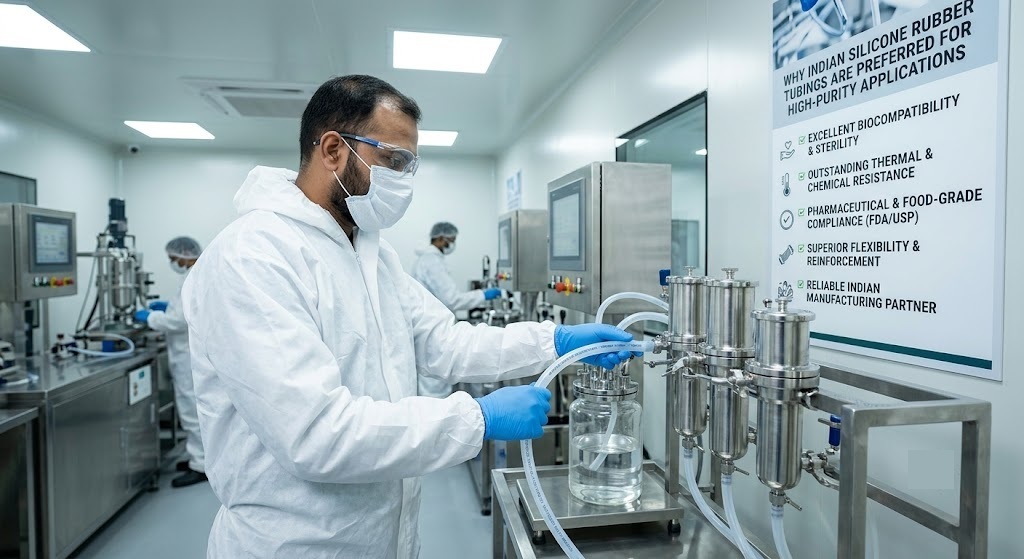
When you step into a high-purity manufacturing facility—a place where even the tiniest speck of dust can halt production or put a critical medication at risk—it quickly becomes clear just how much rides on the choices engineers make. These professionals might not always be in the spotlight, but their decisions quietly shape everything from the safety of our food and medicine to the stability of global supply chains. Among all the sophisticated machinery and gleaming surfaces, it’s often the unassuming tubing—those flexible lifelines that channel fluids and gases—that plays a make-or-break role. Over the past ten years, silicone rubber tubings India have steadily emerged as the go-to option for engineers who refuse to compromise on purity, reliability, or value. But what’s really fueling this shift? Why are Indian manufacturers now setting the pace in a field once dominated by global heavyweights?
Let’s move past the marketing jargon and take a closer look at the real, practical reasons why engineers in pharmaceuticals, biotech, food processing, and beyond are putting their trust in Indian-made silicone rubber tubing.
The Unseen Backbone: Why Tubing Matters More Than You Think
Before going into the detail of Indian silicone tubing, it’s worth taking a moment to appreciate how fundamental tubing is in high-purity processing. Visit any pharmaceutical factory or food factory and you’ll see shining stainless steel, advanced control panels, and banks of high-tech machinery. But look more closely, and you’ll spot a network of tubing running through the equipment—conveying water for injection, culture media, cleaning solutions, or finished product.
If that tubing is leaching chemicals, is bacterial, or pressure-fails, the results can be from contaminated batches to regulatory closure. Simply put, tubing isn’t merely a silent connector—it’s a first-line of defense for purity, safety, and compliance.
The Science Behind Silicone: What Makes It Special?
Silicone rubber’s rise to prominence in high-purity applications isn’t accidental. It’s the result of decades of material science and relentless engineering. But what exactly sets silicone apart from other polymers like PVC, TPE, or even PTFE?
Purity Starts at the Molecular Level
Silicone rubber is in fact a matrix of silicon-oxygen bonds that are extremely stable and inert. This backbone resists attack from most chemicals, doesn’t react with biological media, and is flexible over an enormous temperature range. The result? Fluids flowing through silicone tubing are less likely to acquire unwanted flavors, odors, or contaminants.
But not everything that’s called silicone tubing is of equal quality. The platinum-cured silicone is the standard for high-purity service. Performed differently than peroxide-cured silicone, which is prone to leaving behind extractable byproduct residuals, platinum-cured types are essentially free of extractables and leachables. This is important in applications where even a trace level of impurity will set off alarms.
Transparency and Flexibility: Not Just Cosmetic
Silicone is engineers’ favorite material because they can see what’s going through the line—critical to detect bubbles, blockages, or contamination. Flexibility is also important, particularly in tight equipment arrangements or systems with peristaltic pumps. Silicone has an ability to flex without kinking and continue flowing and remaining intact even under stress.
Why Indian Silicone Rubber Tubing? The Real-World Edge
So, what’s behind the growing preference for silicone rubber tubings India among engineers working in high-purity environments? It’s not just about saving money—though that’s certainly a bonus. The real draw is a rare combination of quality, innovation, flexibility, and a level of customer service that’s hard to find elsewhere.
Production That Competes Internationally
India’s ascent to the pinnacle of the silicone tubing industry did not take place overnight. It has been fueled by consistent investments in technology and rigorous quality control. Now, most Indian factories have cleanrooms and production facilities on a par with those found in Europe or the US. Advanced processes are used in Indian factories so that each tube is consistent, smooth, and dependable. Additionally, Indian brands consistently achieve stringent certifications such as FDA and USP Class VI, and they are open with documentation and traceability—serious requirements for industries where every detail counts.
Customization Without the Hassle
One of the most frustrating things about foreign suppliers is a lack of flexibility. Require a certain size, wall thickness, or color? Forget it with many international firms—you’re out of luck for weeks, or you have to order in bigger quantities than you require. Not Indian manufacturers, though. They’re famous for their flexibility—whether it’s a small run for a pilot program or a large one for a large-scale operation. This flexibility keeps engineers up to speed and receives precisely what their projects need.
Cost-Effective, But Not Cheap
It’s no secret that Indian silicone tubing often comes at a lower price—sometimes 20–40% less than Western alternatives. This is thanks to efficient supply chains and local resources. But importantly, the lower cost doesn’t mean lower quality. In fact, many global equipment makers now rely on Indian tubing, confident they’re getting top-tier performance at a much better value.
Regulatory Support That Makes Life Easier
Dealing with regulations in pharma, biotech, or food can be a headache. Indian suppliers have gotten very good at providing all the necessary paperwork—certificates of analysis, safety data sheets, and batch traceability. This isn’t just about ticking boxes; it’s about making audits smoother and approvals faster, giving engineers and quality teams one less thing to worry about.
Industry Voices: What Engineers and End-Users Are Saying
In order to understand how Indian silicone tubing is perceived on the ground, here are the interviews of some engineers and procurement experts in various industries. Their opinions clearly convey what makes the products so well-liked.
Pharmaceutical Manufacturing
A process engineer at a leading vaccine plant in Hyderabad shared, “We switched to Indian platinum-cured silicone tubing three years ago. Initially, there were concerns about consistency, but the quality has been outstanding. The clarity is excellent, and we’ve had zero issues with extractables in our validation tests. Plus, the supplier was able to deliver custom lengths and pre-cut assemblies, which saved us a ton of time during installation.”
Food Processing
A Gujarat-based dairy cooperative’s quality manager explained, “To us, taste and smell neutrality is absolute. The Indian tubing we use is not only certified food grade but can also withstand repeated CIP cycles without discoloration or brittleness. We’ve had foreign auditors comment on the quality of our transfer lines.”
Medical Device Assembly
A medical device start-up in Bengaluru had an R&D lead who mentioned, “We did prototype with imported tube but went to an Indian supplier for production runs. Being able to get small lots, custom IDs, and quick technical support made a huge difference. That the tubing is USP Class VI and ISO 10993 compliant was the clincher.”
The Technical Details: What Differentiates Indian Tubing?
Let’s be specific. Here are the things engineers always mention as the distinguishing characteristics of silicone rubber tubings India in high-purity applications.
Ultra-Low Extractables and Leachables
This is the acid test for any pharma or biotech tubing. Indian platinum-cured silicone tubing regularly goes through rigorous extractables/leachables testing, with readings well below regulatory requirements. That translates to fluids remaining pure and minimal risk of interfering substances affecting sensitive assays or formulations.
Temperature and Chemical Resistance
Indian silicone tubing is built to take a beating. It performs reliably whether it’s exposed to freezing cold or scorching heat—anywhere from -70°C up to 250°C. It doesn’t flinch at repeated steam sterilization, harsh cleaning chemicals, or even gamma irradiation. For engineers, this means you can count on these tubes to keep working, batch after batch, no matter how tough the cleaning or how demanding the process.
Mechanical Integrity
Engineers value the uniform wall thickness, smooth interior surface, and high burst rating of Indian tubing. This equates to consistent performance in peristaltic pumps, where tubing is required to bend thousands of times without cracking or losing particles.
Visual Clarity and Color Coding
Transparent tubing accommodates visual inspection and process monitoring, and colored or striped versions aid in line identification and cross-contamination avoidance. Indian suppliers have a broad spectrum of colors, including custom colors for particular process applications.
Kink and Collapse Resistance
Silicone’s inherent elasticity renders Indian tubing impervious to kinking even under tight bends—an essential benefit in equipment designs that are space-restricted or on-the-go.
Regulatory Compliance: More Than Just a Stamp
For engineers in highly regulated industries, compliance is not a checkbox, but a survival mechanism. Indian tubing manufacturers have made significant investments in achieving and documenting compliance with:
- FDA 21 CFR 177.2600 (for food contact)
- USP Class VI (for biocompatibility)
- ISO 10993 (for use in medical devices)
- European Pharmacopoeia 3.1.9 (for pharma use)
It’s not about passing exams. It’s about having strict batch control, traceability, and documentation so that each meter of tubing can be traced back to raw material lot. During a recall or audit, this kind of transparency is priceless.
The Customization Advantage: Engineering Without Limits
One of the least recognized pluses of the Indian silicone tubing industry is its flexibility to customize. Require tubing of a particular durometer (firmness) for a custom pump? Prefer pre-cut, pre-sterilized assemblies to save install time? Require tubing with imbedded RFID tags for tracing? Indian suppliers are up for the task.
This customization culture stems from the nation’s larger manufacturing culture: a readiness to work with customers, design, and reinvent together. For engineers, this equates to fewer trade-offs and greater chances to perfect their systems.
Cost and Value: The Big Picture
It’s easy to be drawn to the top-line number, but smart engineers consider total cost of ownership. Indian silicone tubing offers value in several areas:
- Lower capital expense: Due to effective manufacturing and local raw material sourcing.
- Less downtime: Premium tubing translates to fewer breakdowns and replacement costs.
- Quicker delivery: Lead times are shorter, keeping projects on schedule.
- Simplified validation: Easy access to compliance reports hastens qualification.
The payoff? Reduced lifecycle cost and improved ROI, particularly in large-scale or multi-site operations.
Case Studies: Indian Tubing in Action
Here are some actual examples where Indian silicone tubing has had a quantifiable impact.
Biopharmaceutical Fill-Finish Lines
One of the world’s leading vaccine manufacturers based in India suffered from recurring delays caused by long lead times for imported tubing. Replacing the tubing with a domestic vendor not only reduced costs by 30% but also reduced lead times by eight weeks to two. Indian tubing met all extractables/leachables testing and had pre-assembled, gamma-sterilized sets provided by the supplier, reducing installation time by 40%.
Dairy Processing
A major Maharashtra dairy was experiencing protein buildup and cleaning issues in its milk transfer lines. It reduced frequency of cleaning by 25% and enhanced shelf life of the product, following lower microbial levels, by changing over to Indian platinum-cured silicone tubing with a smoother bore.
Analytical Instrumentation
A liquid handling module OEM required ultra-consistent tubing for its laboratory equipment. Indian suppliers delivered tubing with tighter dimensional tolerances and improved clarity than imports in the past, resulting in more precise instruments and lower service calls.
Challenges and How Indian Manufacturers Are Responding
No industry can escape challenges, and the Indian silicone tubing industry is no different. Here’s how manufacturers are addressing the major issues:
Raising the Bar on Purity
With biopharma adopting single-use systems and regulators strengthening standards, demand for even lower extractables/leachables is increasing. Indian businesses are making investments in cleaner compounding, better post-curing, and stricter testing to be ahead of the curve.
Sustainability and Environmental Impact
With increasing pressure on plastics and manufacturing waste, Indian tubing manufacturers are turning to cleaner production technologies—such as closed-loop water systems, energy-efficient curing, and even bio-based silicone precursors. Some are collaborating with end users to create recycling programs for spent tubing, though it’s still a work in progress.
Digital Traceability
The future is digital, and Indian suppliers are on board. Look for more tubing with QR code labels, batch tracking apps, and direct connection to plant MES (Manufacturing Execution Systems) for effortless traceability.
How to Select the Ideal Indian Silicone Tubing: A Practical Guide
If you’re an engineer or procurement expert considering silicone rubber tubings India, here’s a checklist to help you select the ideal fit for your application:
- Define Your Application: Is it pharma, food, biotech, or industrial? Each has varying purity, temperature, and compliance requirements.
- Identify the Grade: Platinum-cured for high-purity; peroxide-cured for less demanding applications.
- Verify Certifications: Seek out FDA, USP Class VI, EP, and ISO 10993 as applicable.
- Assess Chemical and Temperature Compatibility: Match tubing specifications to your process fluids and sterilization procedures.
- Demand Documentation: Require certificates of analysis, material safety data sheets, and batch traceability.
- Think Customization: Don’t take off-the-shelf when your process calls for something unique.
- Assess Supplier Support: Prompt technical support can save days or weeks while commissioning or troubleshooting.
The Road Ahead: Trends Shaping Indian Silicone Tubing
The tale doesn’t end here. A number of trends are set to determine the next chapter for silicone rubber tubings India:
The Rise of Single-Use Systems
As bioprocessing turns toward disposable assemblies, demand for pre-sterilized, ready-to-install silicone tubing sets is on the rise. Indian suppliers are increasing capacity and making investments in cleanroom assembly to capitalize on this opportunity.
Smart Tubing
Consider tubing that senses flow, temperature, or even detects leaks in real time. Indian R&D groups are working with embedded sensors and smart materials to turn this dream into a reality.
Export Growth
With global supply chains under strain, more global companies are looking to India for high-quality, reliable silicone tubing. Expect Indian brands to make increasing inroads into North America, Europe, and Southeast Asia.
Sustainability
From the use of greener raw materials to closed-loop recycling, sustainability will be the differentiator. Indian manufacturers who are out front on this issue will secure the attention of global customers and regulators.
Conclusion: The Engineer’s Secret Weapon
At its core, the rise of silicone rubber tubings India isn’t just a story about advanced materials or competitive pricing. It’s really about a quiet transformation in quality, flexibility, and the way manufacturers listen to what engineers actually need. This shift has been powered by professionals who aren’t willing to cut corners—people who know that in high-purity industries, every detail matters.
So, whether you’re overseeing a new vaccine facility, ramping up food production, or working on a cutting-edge medical device, Indian silicone tubing brings together the purity, reliability, and value that modern operations demand. The next time you walk past a spotless production line or see a critical medicine on the shelf, remember: behind the scenes, it’s often Indian-made tubing quietly keeping everything safe, clean, and running smoothly.