
Choosing the right supplier for your rubber material cannot be determined by costs individually. Using the incorrect rubber components can adversely affect the performance of your equipment and machines. Using the wrong rubber components can lead to cracking, loss of component flexibility, distortion under load, failure at elevated temperatures, failure due to the presence of oils and chemicals, etc
Such components can result in production loss, and failure of equipment with increased maintenance cost. Thus, it is the responsibility of the buyer to evaluate a supplier thoroughly before an order is placed.
Reliable rubber parts exporters should have a good understanding of product specifications, behavior of materials, manufacturing conditions and international quality expectations. They should be able to describe the tests their products undergo and the support they give post-delivery.
The checklist will assist in assessing potential suppliers during sourcing of rubber components in 2026 and make the right sourcing decisions.
1. Review Manufacturing Experience and Knowledge of Industry
To begin, we’ll evaluate what the supplier manufactures. Companies may seem to produce many different types of products, but that doesn’t mean they have experience with different industries and applications.
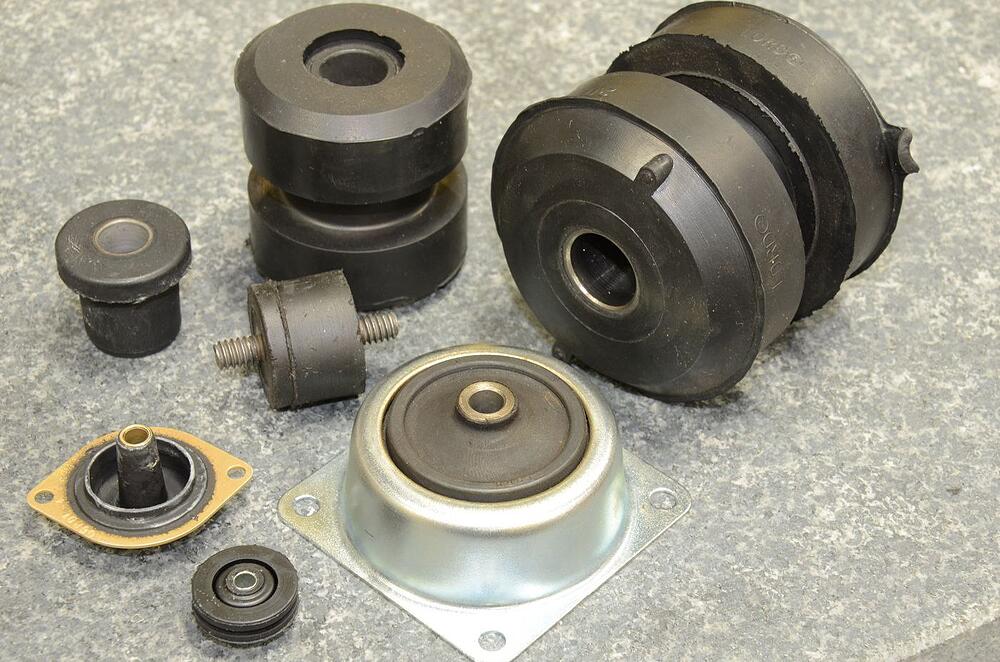
Rubber seals for automobiles are different from rubber components for vibration control in heavy equipment and other machinery.
Thus, potential suppliers should be asked about:
- Their experience with rubber component manufacturing in our industry.
- If they have repeat business for the manufacture of different types of rubber components.
- If they manufacture their own rubber components and moldings.
- If they have the capability to meet special requirements and large quantity orders.
- What other markets and industries they serve.
2. Verify Rubber Material Selection and Specifications
Selecting the right material for rubber components is crucial. Rubber components made with different rubber compounds can have different performance characteristics, making it difficult to discern similarities when products appear similar.
Factors affecting the type of rubber compound formulation can be associated with the operating conditions and the environmental conditions, i.e. temperature and pressure, the presence of chemicals, and other environmental conditions.
Some rubber materials are:
- Natural Rubber (NR) – This material is used in components which require cushioning
- Nitrile Rubber (NBR) – This is used in components that come in contact with fuels, oils and other various fluids.
- EPDM Rubber – This material has good resistance to weathering, ozone and moisture. It is also used in outdoor and sealing applications.
- Silicone Rubber (SI) – Used in components that require elasticity, strength and flexibility at different temperatures.
- Neoprene Rubber (CR) – This material has resistance to weathering and oils and various chemicals.
3. Investigate Quality Control and Product Testing
Good manufacturers should have defined procedures for testing product samples at all stages of the manufacturing process.
Testing should be carried out as early as possible in the process. Checks should be done on the raw materials, the molding process, the environment and the components produced.
Based on the product, the following tests should be carried out.
- Hardness Testing – This test is done to measure the level of resistance of rubber to indentation.
- Tensile Strength Testing – This test is done to measure the maximum level of pulling force that a rubber component can withstand before breaking.
- Elongation Testing – This test is done to see how far a rubber component can be elongated before breaking.
- Compression Set Testing – This test is done to see the degree to which a rubber component retains its shape after it is compressed.
- Ageing Testing –Â Check how a material is impacted from exposure to different environmental and process conditions (such as heating, freezing, etc.) over a period of time.
- Dimensional Inspection: assesses the finished part’s dimensions and shape.
4. Check Certifications and Compliance Requirements
While information regarding a supplier’s quality management systems can be found from certifications, in general, buyers should look beyond certifications when assessing product performance.
For example, the ISO 9001 standards help specify requirements for a quality management system (QMS) and can be certified against. This means that an organization has met the requirements set out within the standard, including establishment of a system to manage quality within the organization.
When determining if a supplier should be accepted, assessment should include:
- Whether the certificate is valid.
- Whether the scope covers the applicable activities in the manufacturing process.
- Whether the company maintains records of inspection and production.
- Whether the company can demonstrate traceability of materials through its quality process.
- Whether the products conform with the required technical regulations and standards.
5. Evaluate Custom Manufacturing and Technical Capabilities
Standard rubber components may not always suit your equipment or product design. At such times, you need a supplier who can understand technical drawings to manufacture components according to your design requirements.
You should check whether the manufacturer has relevant processes, like compression moulding, injection moulding, transfer moulding or extrusion of rubber.
Prior to requesting for a quotation, provide the manufacturer with the required technical information:
- Dimensioned product drawings.
- Required rubber material and hardness.
- Anticipated operating temperature and pressure.
- Chemical or environmental exposure.
- Required tolerances and surface finish.
- Expected order quantity.
6. Compare Pricing, Production Capacity, and Delivery Commitments
Price is important, but comparing quotations only by their final amount can also lead to wrong purchasing decisions.
Less expensive quotations may be for lower grade material, include less testing, or different packaging, and even may have exclusions.
Consider comparison for:
- Grade of material and specification of product.
- Process of manufacturing and inspection.
- Charges for tooling and mold development.
- Minimum order quantity.
- Lead time for production.
- Packaging and international shipping cost.
- Terms of payment and additional charges.
7. Review Export Documentation and Communication
There are several steps after manufacturing that are part of international sourcing. Incomplete or poorly described shipping arrangements can result in costly delays by customs.
Depending on the shipment and the country of destination, the following documents may be required:
- Commercial Invoice
- Packing list
- Bill of lading or Airway bill
- Certificate of origin, if required
- Inspection and quality reports
- Other compliance documents, as required.
8. Check Communication and After-Sales Accountability
A good supplier should remain proactive during the order process. Communication should not end with the buyer’s approval of the quotation.
Not all exporters are created equal, and most have different ways of handling technical questions and sample requests, as well as feedback, changes, and updates. When evaluating suppliers, it is important to understand how they handle quality complaints.
Buyers must agree to terms before placing an order, especially those regarding:
- Defining reporting deadlines for nonconforming products.
- Stipulating inspection and verification procedures.
- Taking replacement or corrective action.
- Identifying whose responsibility manufacturing related defects are.
- Supporting future orders.
Conclusion
There are many considerations when choosing a reliable rubber parts exporter. Most buyers are satisfied by sample testing and delivery commitments. However, promises of delivery can’t be the only consideration. Many commitments are made on the basis of written terms and agreements. It is important that buyers obtain peace of mind regarding the product performance by addressing the risks associated with the sourcing of rubber parts.
FAQ
- What should buyers consider before selecting a rubber parts exporter?
Exporters should have a number of criteria met, of which punctuality is only one. Others are requirements on the type of material, proper tests and quality systems.
- What is the importance of selecting the right rubber material for the industrial components?
Rubber material should be selected in accordance with the physical, mechanical and chemical requirements that the components should possess in order to withstand the conditions of the environment that the components will be exposed to.
- Should samples be requested prior to bulk manufacturing?
Yes, samples if available should verify dimensions and specifications.
- What certifications should buyers consider?
A good starting point should be ISO 9001.
- How can an exporter’s quality control process be assessed?
The process can be assessed by reviewing documents, ensuring traceability of batches of material, and verifying inspection and test results.