
Forging companies India have grown steadily because they put real metal under real presses day after day and deliver parts that actually work. The expansion did not come from fancy slogans. It came from workshops that learned how to heat steel properly, hit it with the right force, treat it afterward, and machine it when needed. Units spread across Pune, Rajkot, Coimbatore, Ludhiana and other clusters have built practical setups that handle everything from small tractor pins to heavy wind turbine flanges.
Raw Material Handling and Selection Practices
Forging companies India begin with steel that arrives by truck — billets, blooms or rounds. Store staff match the delivery note, note every heat number, and check for obvious damage like deep rust pits or bent bars. A quick spark test or spectrometer check confirms the grade. Rejected material goes back the same day. Most units keep a list of trusted suppliers and insist on ultrasonic-tested billets for jobs going to automotive or defense. This early sorting stops bad steel from wasting time and dies later on.
Billet Preparation and Cutting
Cut pieces are made to weight, not just length. Band saws slice the bars and each piece gets weighed on a platform scale. Tolerance stays within two to four percent so the die fills nicely without too much flash. After cutting, ends get a light chamfer and the heat number plus job code is painted clearly. Stacks are organised by size and grade. Simple steps like these help forging companies India keep material yield high and avoid surprises during forging.
Heating Systems and Temperature Control
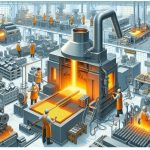
Heating decides whether the part comes out sound or full of hidden cracks. Most forging companies India now run induction heaters because they heat fast and leave less scale. Smaller billets use 100–500 kW coils while bigger sections need 2000 kW or more. Target temperatures sit around 1150–1250 °C for plain carbon and alloy steels. Operators watch pyrometers and soak the billet long enough for heat to reach the centre. Digital logs record every cycle. Old gas furnaces still run in some smaller shops but induction has become the norm because it gives consistent results batch after batch.
Core Forging Operations
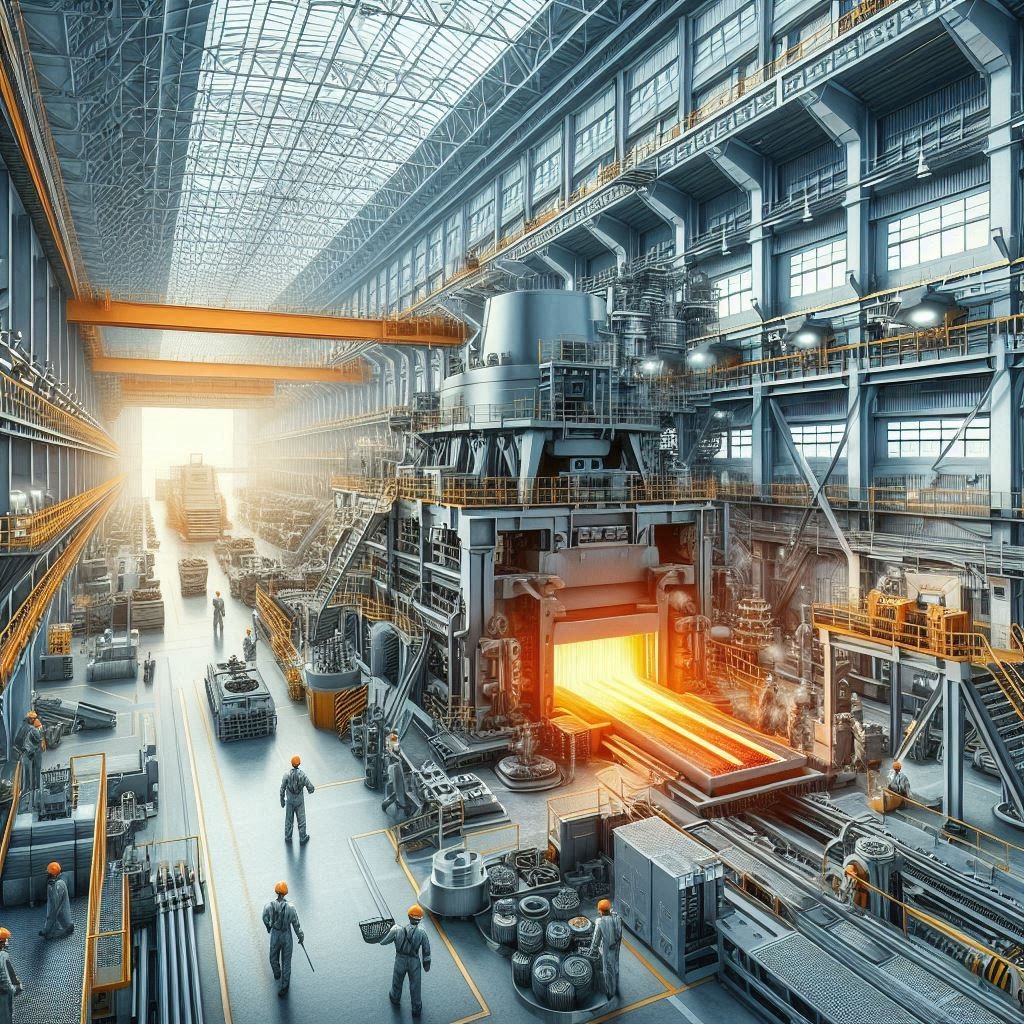
Presses do the real work. Forging companies India run hydraulic presses from 600 tonnes up to 8000 tonnes or more. Closed-die forging handles most repeat orders — crankshafts, connecting rods, gear blanks, hub flanges. Dies come in two to four stages and get sprayed with graphite mix to last longer. Flash squeezes out into the gutters and gets trimmed while the part is still hot.
Open-die work takes care of bigger or one-off items — long shafts, large discs, heavy blocks. Manipulators swing the hot piece under the press while the operator reduces it step by step. Ring rolling machines in some plants produce seamless rings with clean grain flow around the circumference. The mix of closed and open-die work lets forging companies India serve tractor makers one day and wind energy suppliers the next.
Post-Forging Operations
Straight after the press, parts go for trimming. Flash is sheared off in smaller presses. Hot straightening fixtures fix any warp. Then comes heat treatment. Normalising, annealing or quench and temper cycles run in batch furnaces or roller hearth lines. Many shops now use polymer quench instead of plain oil to cut cracking and distortion. After cooling, hardness is checked on multiple spots of every batch.
Descaling follows in shot-blast cabinets. Steel grit or cut wire cleans the surface so magnetic particle or ultrasonic testing can find any surface or internal defects. These steps look basic but when done right they give forging companies India the mechanical properties that customers actually test on arrival.
Machining and Value-Added Services
A big shift in recent years is that many forging companies India now machine the forgings themselves. CNC lathes, milling centres and drilling lines turn rough forgings into near-finish or fully finished parts. Some units do gear cutting, spline rolling or keyway broaching under one roof.
Buyers like this because they receive ready-to-assemble components instead of raw forgings that need extra transport and extra machining elsewhere. The added machining capability has helped forging companies India move up the value chain and win more export orders from Europe and North America.
Quality Assurance and Testing Infrastructure
Quality checks run throughout the process. Most forging companies India hold ISO 9001 and many have IATF 16949 for automotive work. Critical parts get magnetic particle inspection, ultrasonic testing and sometimes dye penetrant checks. Dimensions are verified with CMMs or simple gauges depending on the tolerance.
Mechanical labs test tensile strength, impact values and hardness. Every heat number stays linked from raw billet to finished part through painted marks and paperwork. Third-party inspectors visit regularly for aerospace and defense jobs. This level of checking gives overseas buyers confidence when they place repeat orders with forging companies India.
Tool Room and Die Making Capabilities
Good dies make or break a forging run. Many forging companies India run their own tool rooms with CNC machines and CAD/CAM software. Die blocks are cut, heat treated and polished in-house. Simulation software helps predict metal flow before steel is cut. Quick die-change systems keep presses running instead of sitting idle. Strong die-making ability lets forging companies India develop new parts faster and handle frequent design changes from OEMs without long delays.
Capacity and Infrastructure Overview
Forging companies India operate in clusters. Maharashtra and Gujarat focus heavily on automotive and engineering parts. Tamil Nadu and Punjab serve tractor and farm equipment makers. Northern units often handle heavier industrial forgings for export.
Press lines run with supporting cranes, manipulators and material handling gear. Pollution control systems and water treatment plants have become common to meet local rules. Many plants now track production on basic ERP or even Excel sheets that show daily output, rejection rates and furnace utilisation. This practical infrastructure supports the steady growth seen across forging companies India.
Sustainability and Process Improvements
Energy costs push shops to save wherever possible. Induction heating replaced older furnaces in many places. Waste heat from furnaces is captured for pre-heating billets or running nearby processes. Flash and scale get collected and sold back to steel makers. Water from quench tanks is treated and reused.
Process simulation cuts down on trial forgings and wasted steel. Digital temperature logging and press force monitoring help catch problems early. These small but steady improvements keep costs under control and allow forging companies India to remain competitive year after year.
Conclusion
The real story behind the growth of forging companies India sits in the workshops — accurate billet cutting, reliable heating, solid press work, proper heat treatment, clean machining and thorough inspection. These capabilities were built step by step through daily production rather than big announcements.
As long as forging companies India keep sharpening these practical strengths — better temperature control, tighter process discipline and wider machining services — they will continue to gain ground in both domestic and global markets. The parts coming out of these units today power tractors in the field, trucks on the road, turbines in the wind and machines in factories across continents. That quiet manufacturing depth is what actually drives the numbers higher every year.