
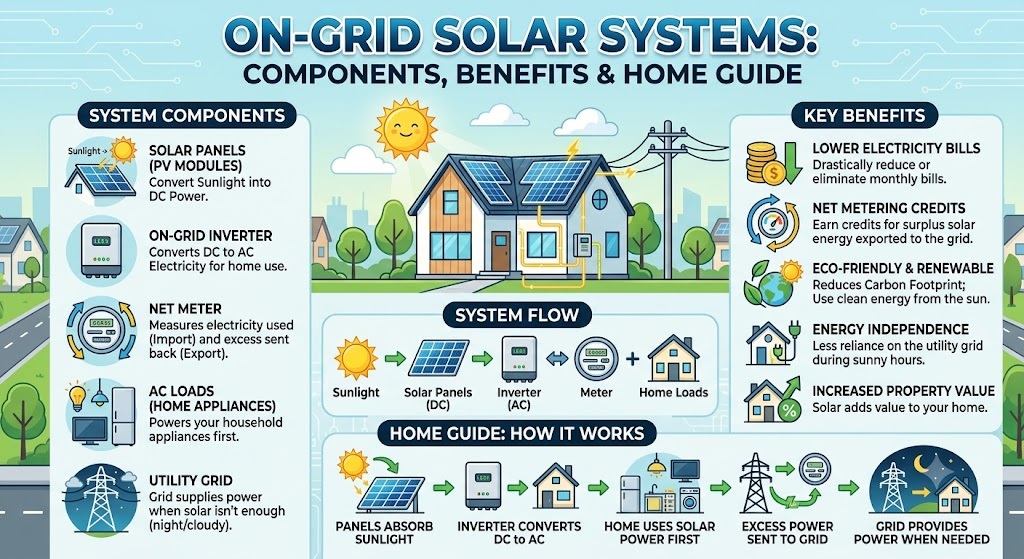
An on-grid solar system is a kind of solar energy system that is directly connected to the grid, thereby allowing it to use solar panels to generate electricity, and transfer the surplus of energy back to the grid. In this type of system there are mainly solar panels, grid-tie inverter, rack mounting structure, cables and electrical protection of the system. Also there is a bi-directional meter to track the power taken from the grid and the power provided back to the grid. On-grid solar systems help an ordinary homeowner to decrease his/her dependence on the grid and decrease electricity costs.
Benefits of installing On-grid solar systems for homes
Having an on-grid solar system at home can help decrease reliance on electricity from the grid while lowering one’s monthly power bills. This system allows homeowners to generate electricity from sunlight in the daytime and utilize excess electricity through proper arrangements such as net-metering. Usually, there’s no need for any batteries in an on-grid system, making it easier to set up and maintain in comparison with battery systems. Further, this system promotes clean energy consumption and helps families control their electricity expenses in the long run.
What are cost factors that needs to be considered while installing On-grid solar systems for homes
The price of putting up an on-grid solar system for a house is based on several factors including its capacity, quality of panels, type of inverter and mounts used, as well as cost of installation, wiring, safety devices. Other elements that may influence price include roof condition, availability of space, transport of materials, electrical upgrade work to be done and related permits. Therefore, it is also important for owners to take into consideration factors like maintenance expenses, warranty, estimated electricity produced, and any government incentives.
How to choose the best On-grid solar systems for homes
To find the correct solar system which runs On-grid solar systems for homes, homeowners should evaluate electricity usage, roofing area, financial status, etc., which may affect future energy consumption. Choosing good-quality solar panels, reliable grid-connected inverter, sturdy mounting systems, and good safety equipment is critical. Apart from these, the homeowner should check the system size, expected power generation, warranties, installation service, maintenance service, and other subsidies available prior to making the decision.
Conclusion
If you want to create renewable energy and reduce dependence on the utility grid, then setting up a grid connected solar system will be the best option for your home. Taking the time to understand how the system works, its cost, the subsidies you will receive, and how much energy it produces will allow you to make the right decision. A good quality system and a reputable solar company will make sure that you have a reliable installation which won’t have any issues in the future.