
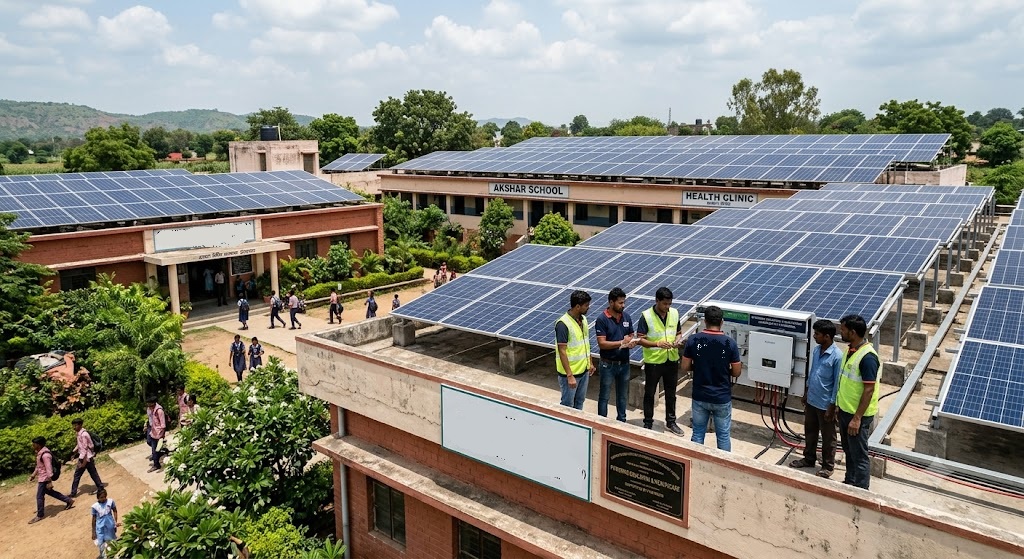
NGOs and organizations often have minimum funds available. A large part of their budgets is used for education, healthcare, community building, social security, and other important activities. Increasing electricity prices usually put pressure on these budgets. Solar panel systems for NGOs and organizations can help to reduce costs of electricity and switch to a less expensive energy model. Rooftop solar systems can generate energy from sunlight and partially satisfy energy needs of NGOs and organizations. Money saved from electricity bills can be used to finance social programs and primary objectives of the organization.
Why NGOs and Institutions Should Consider Solar Energy
Electricity is a crucial aspect of a school, nonprofit organization, community centre, hospital, church, and other nonprofit institution. These institutions use electric-powered devices in every activity that requires electricity, from lighting up their buildings to using water pumps and cooking appliances. It is possible to lessen the dependency on the electricity grid with solar panel installation. The solar panel systems for NGOs and institutions is designed in an optimal way can produce energy upon the sunshine and aid in reducing the amount of electricity coming from the grid. Moreover, solar energy can help achieve the environmental goals of an organization.
Rooftop Solar Systems for NGOs and Institutions
The roof can act as a perfect location for solar panel installation. So, it is imperative to consider factors such as roof size and structural integrity, sunlight exposure, electricity usage, and future energy needs before solar panel installation. A solar EPC service provider will visit the site and evaluate the above-mentioned factors. Only based on the evaluation will the company be able to suggest an appropriately sized system. The proposed system will comprise solar panels, inverters, mounting structure, cables, battery protection system, monitoring systems, and any other necessary component.
Applications of Solar Power
Solar energy is used in a number of practical ways by NGOs and organizations. For instance, it can generate power for equipment like LED lights, fans, computers, office equipment, communication systems, water pumps, educational devices, kitchen appliances, and minor medical devices. In addition, solar energy can also power charging points and other low-load equipment.
How to Choose a Solar EPC Service Provider
Before venturing into the investment of Solar Panel Systems for NGOs and Institutions must make it a priority to partner with an experienced solar EPC service provider. With expertise in site inspections and a thorough understanding of energy consumption requirements, a competent provider will also gauge the available rooftop area, degree of shading, electricity load, system capacity, budget, and installation needs. Having collected the relevant information, the service provider can customize the solar energy system according to the electricity requirements of the institutions in question. Organizations must compare the provider’s experience, project portfolio, equipment quality, warranties, installation services, maintenance assistance, and after-sales assistance.
Government Subsidies and Incentives
Renewable energy initiatives might also be benefitting from government programs, subsidies, or other incentives based on the type of organization, project, location, and applicable regulation. Nevertheless, stipulations relating to coverage, condition, and subsidies can change, so NGOs and organizations must confirm the current requirements with the relevant government body or the solar EPC providers before taking any subsidies into account while calculating their budgets.
Long-Term Benefits of Solar Installation
An effective solar panel installation does not only help in cutting down on energy costs. However, it also enables businesses to lower their energy expenses and become less reliant on regular electric supply. Through lower energy expenses, NGOs can free up more funds for their charitable activities. Educational and other types of institutions, on the other hand, can use their savings for their infrastructure, learning materials, repairs, and other operational needs. With solar energy, organizations can achieve their financial goals while remaining environmentally responsible in their operations.
Conclusion
Solar panel systems, specifically designed for NGOs and similar organizations, present a viable solution for getting rid of excess electricity costs while promoting the use of renewable energy sources. Rooftop solar installations can be tailored based on the available space, electricity consumption, budget, and requirements of the project. Therefore, it is advisable to seek assistance from a solar EPC expert to ensure that an adequate site assessment and system design are conducted to match the energy requirements correctly. In addition, government incentives might give additional financial support depending on the suitability of the project.