

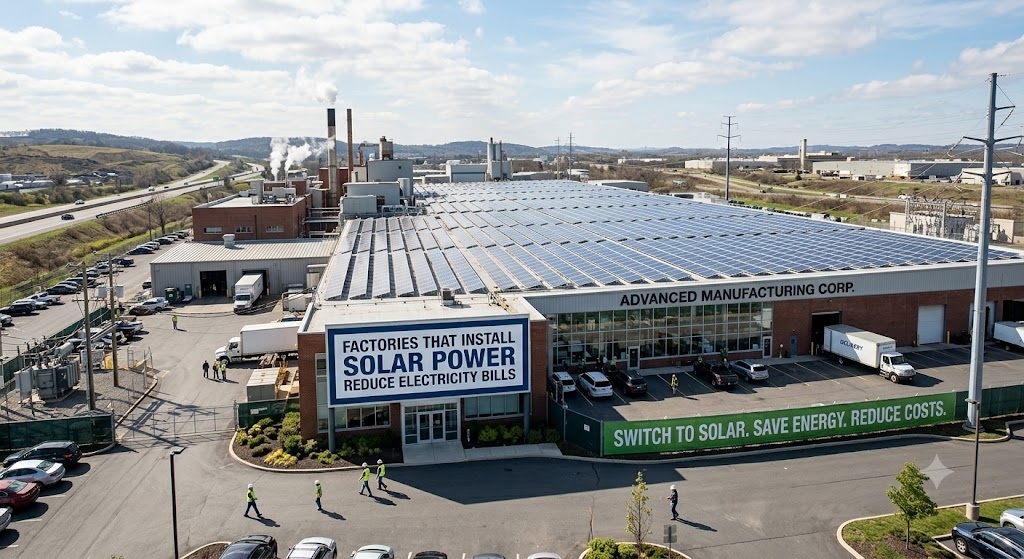
Factories that use solar panel technology can help them lower their electricity bills. They will produce clean energy on-site, which means that they will not have to rely only on energy provided via electricity grids. The solar panel system will convert sunlight into electricity that the factory can use for its machinery, for lighting, for cooling systems and all other equipment in use. Thus, there will be less electricity bought from the grid, which will successfully cut down the monthly power bills. Factories that use electricity during the day can successfully obtain solar energy for years to come and reduce dependence on changing electricity tariffs.
Factories that uses Solar power system generate electricity during day time
Factories equipped with solar power systems can produce electricity during day hours when sunlight is accessible. Solar panels placed on the factory roof or open areas transform sunlight into electricity to be used in working machines, lighting, cooling systems, and other devices. This enables factories to fulfill considerable amount of their energy needs during daytime while at the same time reducing their reliance on electricity from the grid.
Reduction in dependency on power grid system
Renewable power systems enable installations to lower their reliance on the grid by producing power at the installation. The electricity created by solar installations can either be consumed straight away or stored. This reduces reliance on the grid and gives installations more control over their electricity use. Renewable power can also help installations maintain their processes better when there are interruptions in electricity supply, especially when combined with the proper battery system.
How to find the best Solar power for factories
When searching for the ideal Solar power for factories, firms ought to evaluate their power usage, the area available on the roof or on the ground, and their hours of work. They should determine the system size needed based on the actual demand for electricity and compare the performance, efficiency, warranties, and life span of the solar modules and inverters. It also makes sense to investigate the installer’s experience, accreditations, quality of installation, after-sales assistance, and maintenance support provided during operation. It is worth comparing system pricing, anticipated power output, profit generation, and repayment time frame in order to find the best solar solution for the company’s long-term electricity requirements.
What is the cost of Solar power for factories? what are cost factors that determine the overall installation cost?
The solar power system cost for factories is determined primarily by the size of the system and the energy needs of the factory. Some of the main contributors to total cost are solar panels, inverter capacity, mounting structures, electrical equipment, and installation costs. Other factors determining cost include roof or ground preparation, battery storage, maintenance, and costs associated with site surveys, grid connection, and permits. Therefore, the cost of the solar system needs to be compared against expected savings and payback time.