
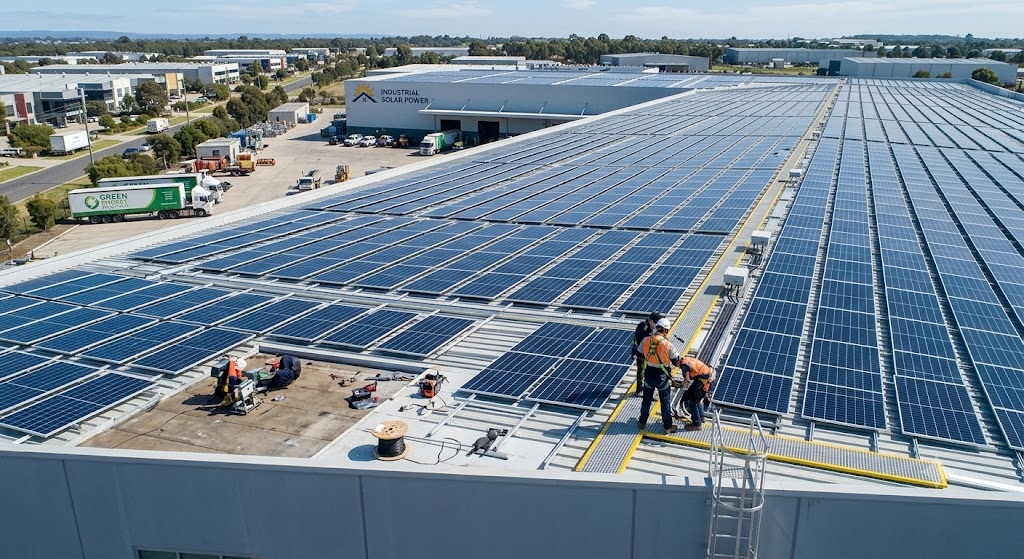
An industrial solar panel system is a massive installation of solar energy sources meant to generate electricity for manufacturers, factories, warehouses, and another kind of industrial site in order to lessen reliance on traditional grid electricity sources. The industrial solar panels contribute to reducing electricity costs, improving energy security, minimizing carbon footprint, and achieving sustainable development as well as keeping business process uninterrupted. It is necessary to analyse the site to install industrial solar panels carefully considering space, energy use, roof or land situation, solar irradiation, structural integrity, capacity of the system, local regulations, grid connection, and ROI.
Industrial Solar Panel Cost, Selection & Optimization
The factors which determine the Industrial solar panel installation cost include the power capacity of the system, the type of panel, inverter technology, types of mounting, site-specific factors, and how complicated the project is in general. The bigger the solar facility is, the fewer costs are associated per kilowatt. Cost-effective installations involve choosing high-efficiency panels, developing the right system size, making most of space available, selecting the right components, optimizing the panel tilt, and taking advantage of government incentives and net metering methods. Selecting the best industrial solar panels one should check the following characteristics such as efficiency, durability, total power output, warranty, performance in local weather conditions, the manufacturer’s good reputation, certifications, and return on investment (ROI).
Industrial Solar Panel Applications, Uses & Significance
Solar panels for commercial use can be installed on the rooftops and open fields of factories and manufacturing facilities as well as warehouses, industrial zones, production facilities, transfer stations, and other large factories with high electricity requirements. Commercial solar energy systems are often used to operate production machinery, production equipment, HVAC systems, lights, water pump systems, refrigeration, transport systems, and other processes in factories. It is widely acknowledged that the installation of industrial solar panels is important because it helps to reduce electricity expenses, achieve energy independence, reduce CO2 emissions, improve sustainable performance, and provide long-term financial benefits of renewable energy sources.
Industrial Solar Panel Features, Components & Maintenance
Industrial solar panels have been made in such a way to offer a high output, efficient operation, robust nature to withstand weather conditions, long time of functioning, and little need for maintenance while possessing a possibility of scaling up. An industrial solar panel station usually comprises solar PV modules, inverters, mounting systems, charge controllers (for battery systems), battery storage (if applicable), DC and AC cables, safety boxes, or another equipment. The industrial solar panels shall be regularly cleaned, checked for broken wires and mountings along with the performance of the system and inverters, cleaned from nearby vegetation, batched for inspection.
Conclusion
Industrial solar panel systems are becoming a viable investment for manufacturing firms, warehouses, and other industrial companies that need clean and affordable electricity. They generate energy on-site, hence providing various benefits to industries throughout their operation including reduced operating costs, higher energy security, minimized carbon emissions, and accomplishment of their long-term aims. Proper planning, system design, good-quality materials, and ongoing maintenance help the systems to operate properly and provide good returns through the lifetime of their usage. With India increasing the amount of renewable energy generated and promoting green manufacturing, industrial solar panel systems will be increasingly important in boosting productivity in the industrial spheres and developing sustainable manufacturing.