
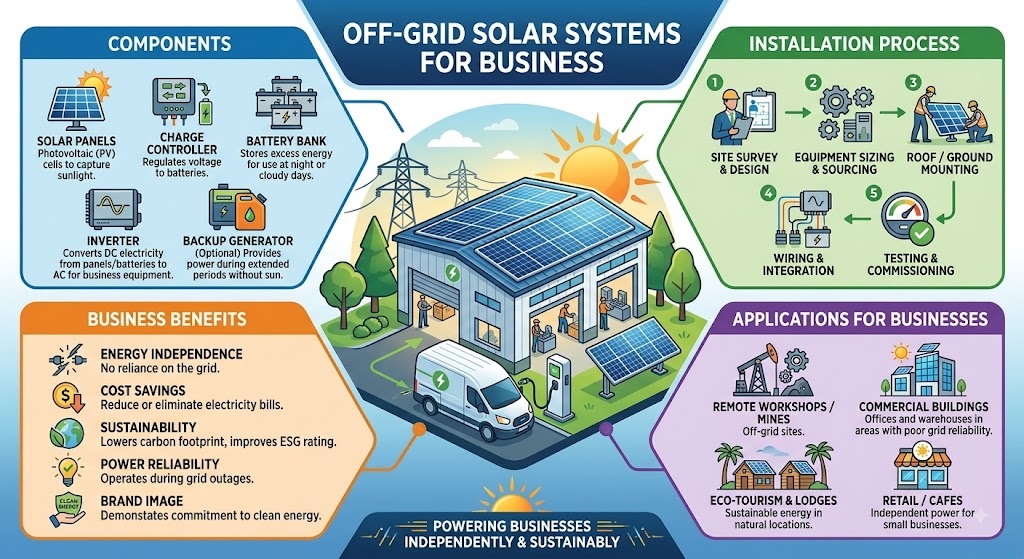
An off-grid solar setup for commercial use is an independent renewable energy system that produces and stores solar energy without any connection to the grid. Unlike a grid-connected solar system, an off-grid one relies on batteries for energy storage and has an independent power supply. This type of system is used by companies and business for various purposes, e.g. for intending to be energy independent, to maintain power during grid outage, to lower the use of generators, and to control electricity expenditures. The primary components of off-grid solar energy systems consist of the following: solar panels, mounting systems, an inverter, battery storage, a charge controller, cables, protective equipment, and energy monitoring systems. The installation process involves affixing the solar panels in the chosen site, connecting the charge controller and the inverter, adding batteries, and connecting the system to the electrical consumers of the installation. Â Solar EPC companies, installers and specialists install off-grid solar systems at various companies such as factories, retail places, and farms.
How to Choose the Best Off-Grid Solar System for Business: Consulting & Purchasing Tips
Select an off-grid solar systems for business according to the energy requirements of your business, peak loads, geographical region, amount of sunlight received, volume of battery storage, efficiency rate, the amount of money you have available, and energy needs in the future. Professional consulting allows businesses to define their energy needs, make the right choice of components to be used, size the solar system, cost estimates, etc. Compare the power of the system, performance of solar panels, the battery types, characteristics of inverters, available warranty periods and certification, installation support, maintenance services, and reputation of the supplier before making a decision.
Off-Grid Solar System Manufacturing: Manufacturers, Quality Control, Testing & Verification
The process of creating an off-grid solar system involves designing and assembling solar panels, batteries, inverters, charge controllers, mounting mechanical devices, wiring, protection devices, and monitoring components, depending on the required power output of the system. The solar equipment manufacturers, renewable energy companies, system integrators, and EPC companies produce and supply off-grid solar systems. Quality control entails checking all components, carrying out electrical safety checks, assessing battery performance, verifying inverters, confirming wiring, evaluating the compatibility of the whole system as per the industry standards and meeting the necessary code requirements. Testing of all systems is performed through electrical performance, loading or charging/discharging of batteries, efficiency of inverters, insulation, and safety testing methods before installation to be assured of proper functioning of the systems.
Conclusion
Finally, off-grid solar systems are an effective and independent source of power for businesses including factories, offices, farms, retail stores, and remote installations that do not have consistent access to the grid. When choosing the appropriate system, it is important to assess the energy demand, peak loads, energy storage capacity, and solar production, and to do so with the help of professional consulting services devoted to system design and implementation. Each part of the process from manufacturing to quality assurance, and testing has an impact on the safe and efficient operation of the system. If businesses collaborate with trustworthy manufacturers and qualified EPC contractors, they will be able to eliminate dependence on the grid and thereby save on energy costs in the long run.