

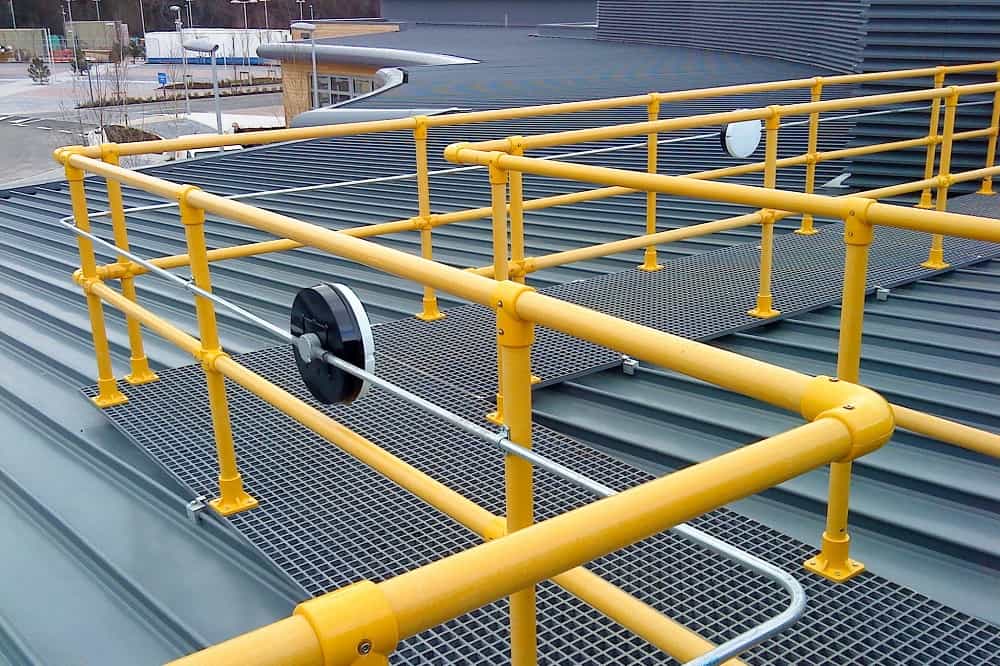
Handrails, unless installed incorrectly, do not tend to raise concerns until a problem develops. On an industrial platform or chemical processing plant, a handrail system’s post or rail coming unscrewed or corroding is an unacceptable safety hazard. GRP handrails India have been increasingly specified over the last decade for industrial sites handling damp or corrosive materials, chemical processing plants, and commercial jetties. The service life of the GRP handrail systems is, however, dictated by multiple considerations beginning from the selection of the appropriate resin to installation torque specifications followed on-site.
Why Service Lives Vary Between Projects
GRP handrails fabricated from the same material can perform distinctly differently in similar environments after five years of exposure to weather or service conditions. Inconsistencies between the two rail systems, however, invariably stem from fabrication practices rather than an inherent difference in the material properties. Resin formulation, pultrusion specifications, and UV protection are critical to understanding how and why a GRP handrail fails prematurely.
Resin Formulation and UV Protection
GRP handrails India profiles are fabricated by pulling glass fibre reinforcement and resin through a heated die in a process known as pultrusion. The choice of resin formulation significantly impacts its resistance to chemicals, UV exposure, and temperature cycling. Isophthalic polyester resins are generally better at resisting chemical attack, making them suitable for chemical processing plants. Vinyl ester resins offer enhanced resistance to acids and alkalis and are, therefore, ideal for effluent treatment works. Orthophthalic resins, on the other hand, are generally cheaper but tend to exhibit reduced performance in highly corrosive environments.
Fibre Orientation and Wall Thickness
A commonly overlooked consideration when specifying GRP handrails is the percentage of fibre loading by volume. The glass fibre content and orientation in a given profile are directly linked to its load-bearing characteristics. As such, a handrail with reduced fibre content or poor orientation may exhibit unexpected flexural properties when subjected to impact loads, foot traffic near staircases, and stacking or machinery loads. Similarly, a thinner cross-section compromises the rail’s ability to resist bending forces. Reputable GRP handrail fabricators typically adhere to published standards for minimum wall thickness and fibre content and utilise standardised thicknesses for handrails and balustrades in accordance with ASTM D4385 and other pultrusion specifications.
UV Exposure and Surface Veils
GRP profiles subjected to prolonged exposure to sunlight tend to exhibit bloom after years of service. Fibre bloom manifests as a whitish discharge from the surface of the profile due to the degradation of the resin matrix, exposing embedded glass fibres. In addition to being an aesthetic concern, fibre bloom can be a harbinger of delamination and deterioration as moisture gains access to the weakened resin layer. UV inhibitors in the resin formulation and veil layers over the surface are critical in preventing fibre bloom and should be verified when selecting a GRP handrail system. A well-protected profile should exhibit increased resistance to bloom for more than 15 years of outdoor exposure. Profiles that lack UV protection or cure inhibitors typically exhibit bloom after approximately three to four years of exposure.
Adhesive-Bonded vs Mechanical Fixings
The choice of jointing details also plays a vital role in the service life of GRP handrail systems. Adhesive-bonded joints offer enhanced joint integrity and are generally more reliable than mechanical fixings. Using suitable structural adhesives such as epoxies or polyester when bonding GRP sections together creates a monolithic bond that resists loosening due to vibrations. Mechanical fixings, on the other hand, typically use stainless-steel screws to secure handrail posts and balusters to the anchoring plate. Fixings allow for easier disassembly and inspections but require greater care when locating holes to avoid weaken the section due to the drilling activity.
Installation Considerations Affecting Service Life
While fabrication specifications exert a significant influence on the service life of GRP handrails, installation considerations should equally be reviewed during the specification process. For instance, anchorages for GRP handrail posts should always use fixings that match the anticipated load class of the handrail system. The base plate must also be mounted on a suitable surface that includes concrete, steel, or other hard substrates. Failure to utilise the correct fixing ultimately causes the entire handrail to loosen over time, creating a potential safety hazard.
Expansion gaps also need to be incorporated in specifications for handrail systems subjected to large temperature variations. GRP handrails have different expansion rates compared to steel, and this differential must always be considered when designing anchorages and joints. A common scenario we encounter involves GRP handrail suppliers who fail to leave expansion gaps during the installation process. The rail subsequently buckles due to differential expansion and contraction between the GRP profiles and steel structures, causing joints to pull apart during winter.
Site-Specific Considerations
GRP Handrail systems typically require minimal maintenance compared to conventional steel handrail systems. Nevertheless, a regular inspection regime is necessary to detect signs of corrosion or damage to glass fibre reinforcement at an early stage. Handrails located in coastal or industrial environments are prone to greater deterioration due to salt spray or chemical exposure and should, therefore, be inspected at least once a year. A routine cleaning regime using approved cleaners also aids in prolonging the life of the handrail system.
GRP Handrail systems often attract specifiers searching for a corrosion-resistant handrail solution for aggressive environments. As such, some clients erroneously assume GRP handrails to be maintenance-free. In practice, however, GRP handrails requires reduced maintenance schedules compared to their steel counterparts. Less frequent but proper maintenance prolongs the service life of a handrail system while uncovering potential problem areas such as failed joints or corrosion pockets that would benefit from closer inspection.
Specifying GRP Handrails: Role of Complete Manufacturers
Manufacturers that offer complete GRP handrail systems that encompass profiles, balusters, and balustrades typically possess greater insight into jointing details and anchorage systems that maximise the service life of the handrail system. Aeron Composite Limited takes a similar view in its approach to GRP handrail fabrication, ensuring that the selection of appropriate resin, UV protection, and jointing details are applied in tandem with the intended application of the handrail system. GRP handrails India are specified according to the environmental conditions, including chemical processing plants or shipyards.
Final Remarks
A GRP handrail system’s performance and, by extension, its service life depend on numerous considerations beginning from the choice of resin formulation to post-installation maintenance and inspection regimes. Specifying GRP handrails India for a project is only the first step in ensuring long-term value for money. Understanding the nuances of GRP handrail installation and maintenance, including the key considerations at each stage, is crucial in prolonging the service life of the handrail system. Procurement teams and engineers involved in GRP handrail projects should, therefore, ask detailed questions at every stage to maximise the value of their investment.