

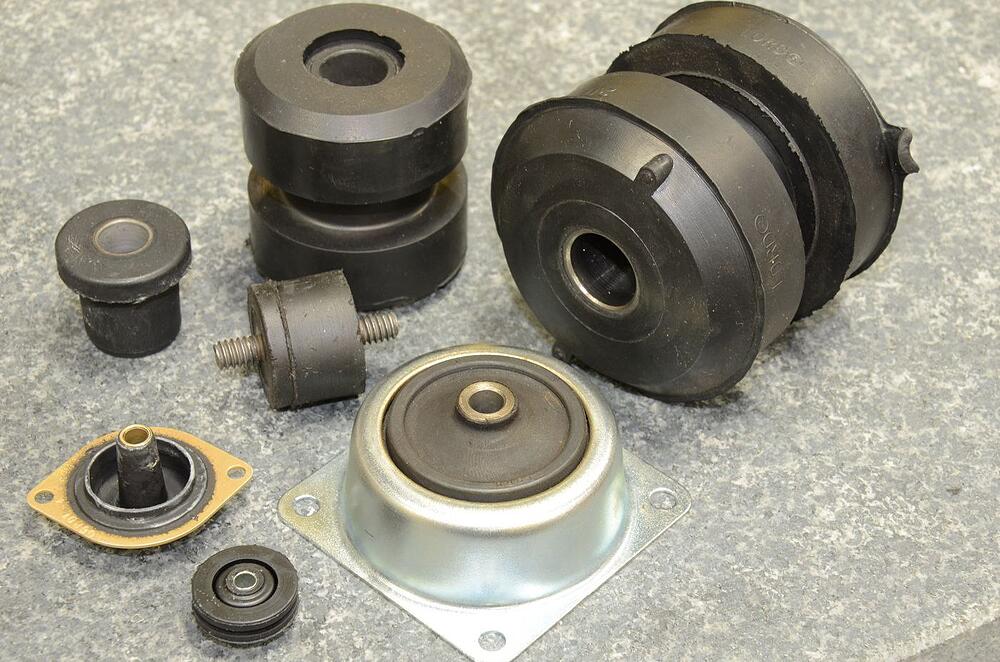
Global Original Equipment Manufacturers (OEMs) are reviewing their sourcing strategies for rubber components. They want suppliers who can ensure consistent quality and dimensions and meet technical and cost requirements while adhering to scheduled deliveries. India is gaining place in the focus of manufacturers for rubber component sourcing, as the country’s rubber manufacturing industry is developing its skilled workforce, engineering and industrial know-how as well as export-infrastructure.
For OEMs, price is not the only consideration when they choose a supplier. Rubber components can be integral to the safety and the performance and durability of a product. Variation in the quality of raw material or dimensions of a component can impact the final product. Hence, manufacturers are assessing Indian rubber parts exporters for their ability to deliver long term manufacturing and supply partnerships.
Strong Manufacturing Capabilities for Different IndustriesÂ
India has a well-developed rubber manufacturing base which serves various industries including automotive, electrical, construction, agriculture, engineering and industrial machinery.
Different rubber components such as:
- Gaskets and seals
- Rubber bushings (automobile)
- O rings and washers
- Moulded rubber components
- Anti vibration mounts
- Rubber profiles
- Custom made rubber parts
Cost Efficiency Without Ignoring Product QualityÂ
When it comes to production costs, global OEMs usually see the realities of the manufacturing costs of different countries. However, the cheapest producer does not mean the best business results. Cheap rubber components increase rejection rates, increase maintenance costs, and increase production losses due to failures.
Rubber rings manufacturers India have their production facilities in India and have a good number of skilled technical personnel and consequently, good and competitive manufacturing processes. This gives OEMs good opportunities for cost savings while maintaining their product specifications.
The important consideration is the manufacturer’s process control and inspection procedures.
Reliable sourcing means considering the total cost of ownership, that is, quality of the product, transit time, and delivery performance. Long-term sourcing relationships should be centered on providing assurances of performance and reliability.
Better Customisation and Application-Based ManufacturingÂ
There are variances in the requirements that different OEMs have for rubber components. Components used in automotive engines may need to withstand hot engine oil and heat, as well as constant vibration. Rubber components in industrial machinery may need to withstand constant compression and have specific levels of flexibility and resist certain chemicals.
Indian rubber manufacturers are increasingly working with samples, drawings, materials specifications, and application requirements.
Depending on the type of order, customization may include:
- The selection of a suitable rubber compound from EPDM, NBR, silicone, or other natural rubber.
- Making components per customer drawings.
- Adjusting hardness and thickness of components.
- Changing the size and dimensions of components.
- Designing and making molds for special applications.
- Testing components under conditions for which they are required to perform.
Growing Focus on Quality Standards and TestingÂ
When selecting an international supplier, product quality is crucial. Rubber components have to stand up to various environmental conditions and operate within specified limits. For example, automotive rubber seals must have sealing properties regardless of the range of operating temperatures. Similarly, vibration control components must have adequate mechanical strength and flexibility.
To ensure quality, professional manufacturers perform numerous tests at multiple stages of the production process. Some of these tests include:
- Inspection of raw materials.
- Testing of rubber compounds.
- Hardness and tensile testing.
- Dimensional and weight checks.
- Compression set test.
- Final inspection of the product.
OEMs should verify whether a supplier adheres to relevant ISO or industry-specific quality requirements. Certifications and records of documented inspection procedures and traceability records help manufacturers evaluate the reliability of their suppliers’ manufacturing processes.
Access to Skilled Technical and Engineering SupportÂ
Making rubber components requires knowledge of material behavior and design of the production molds. Other considerations are production process conditions and the requirements of the final component, as well as the application.
Many Indian manufacturers employ engineers with decades of experience, and as a result, are capable of assisting OEMs during new product development and the production planning process.
An example is a situation where a component fails due to too much heat or chemical exposure. In that case, the manufacturer needs to investigate the rubber compound and not just modify the component to reduce size.
If a manufacturer has such technical knowledge of materials, it will help develop innovative products that improve the performance of existing products and reduce needless changes to the design and material used to manufacture products, as well as delays in production.
Export Experience and International Supply Chain OpportunitiesÂ
Global OEMs require suppliers with an international focus on procurement. There is more to manufacturing a part than just making it. This includes export documentation, the planning of shipments and packaging, product identification and coordinated delivery.
Indian exporters are well versed in the export process and are experienced in communication with international clients.
However, OEMs should consider a supplier’s actual experience in exporting, the capacity to produce and deliver, and the means of transport, to ship the goods.
A manufacturer with a controlled supply chain can help customers meet their inventory requirements, and ultimately reduce the risk of an interruption in production.
Opportunities for Long-Term OEM PartnershipsÂ
Global manufacturers prefer consistent supplier relationships.
Long-term supplier partnerships with Indian rubber parts exporters will allow OEMs to source Indian rubber parts consistently.
A partnership is considered successful based on the following:
- Consistent quality of production batches.
- Clear communication on technical aspects.
- Fulfillment of orders.
- Traceability and correct documentation.
- Assisting in product development.
- Competitive prices.
- Timely delivery of the finished product.
What do global OEMs consider before finalizing a supplier in India?
Though there are several sourcing options in India, OEMs carry out an extensive evaluation of the manufacturer prior to entering into business with them.
Assessment Criteria:
- Manufacturing Expertise: check if the supplier has the capability to manufacture similar rubber components.
- Material Expertise: check if the supplier can develop the rubber compounds required for the application.
- Quality Management: evaluate certifications and review quality records, test protocols and inspection records.
- Production Capacity: check the supplier’s capability to manufacture the required quantity and to fulfill the customer demand in the long term.
- Sample Assessment: evaluate the samples provided to award the business.
- Export Capability: check the supplier’s capability to fulfill the export requirements of the OEM.
Conclusion
Based on the above assessment, make the final decision to award the business to the manufacturer. Indian rubber parts exporters are competitive for both simple and complex components. Indian rubber parts manufacturers are more price competitive due to the country’s comparatively lower costs and higher export opportunities. Higher export opportunities are attributed to an ample supply of competitively priced skilled labor. Long-term partnerships between OEMs and Indian rubber parts manufacturers such as FusionPolymer can be established by evaluating a maker’s first tier suppliers’ rubber parts and considering the quality of raw materials, tests performed, extent of exports and other aspects.
FAQs
1. Why are OEMs sourcing rubber components from India?
Indian manufacturers offer price and quality competitiveness.
2. What are the types of industries that buy rubber components from India?
Automotive, construction, agricultural, electrical and other industries buy rubber components from India.
3. Are Indian manufacturers able to make customized components for OEMs?
Yes, customization of rubber components as per customers’ drawing and requirements is possible.
4. What quality checks should OEMs perform prior to choosing an exporter?
Tests performed on the materials should be evaluated along with certifications and inspection reports.
5. What are common materials of industrial components?
EPDM, NBR, natural rubber and neoprene are some of the common materials.