
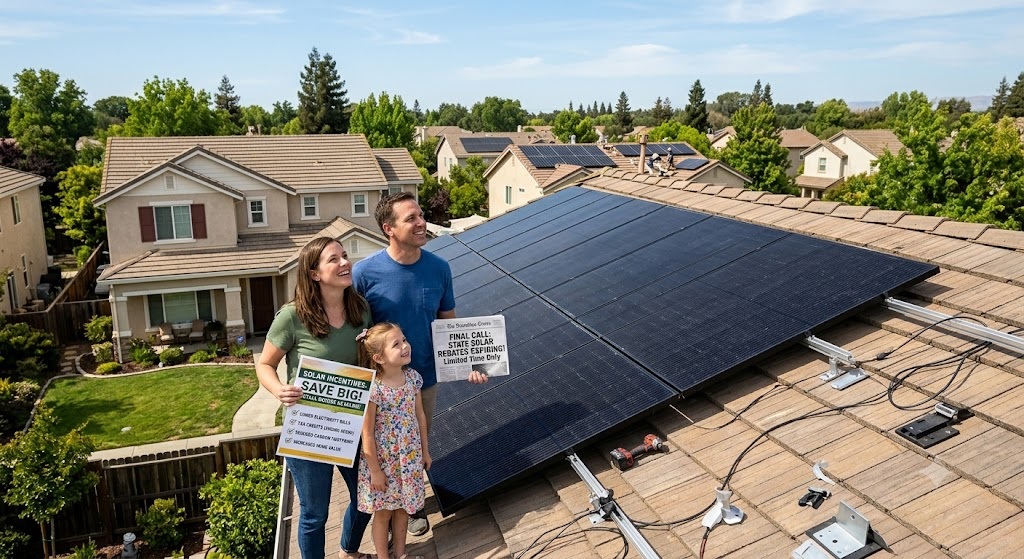
The rush for rooftop solar panel installation by people in the USA stems from growing utility prices and the expiry of federal subsidies that makes conventional utility bills costly. Electric companies push up prices year after year, and families see the appeal of solar panels more as a safeguard against high inflation rates than just a green technology. However, both federal tax credits and net metering policies that allow residents to sell back the excess electricity to the grid are on schedule to expire soon. Those who wait for even a few months risk losing thousands of dollars in rebates and discounts, which explains a massive increase in solar installations across the country.
Stop Paying Full Price for Electricity: The Solar Loophole You Need to Use Today
As utility companies continue to raise their prices every year, savvy homeowners are choosing to stop paying retail prices for their electricity altogether. This has been made possible through the use of government-sponsored solar incentives and net-metering programs. Using this so-called solar loophole, solar powered systems can be installed on any property with little or no upfront cost—the owners can fully benefit from local and federal aid, which will reduce the costs of rooftop solar panel installation and allow companies to use the electricity generated by their roofs. Instead of throwing away money on monthly energy bills that keep growing, people will find themselves paying off their own energy generation system. This will enable them not only to get rid of bills but also to sell the excess electricity to the grid in order to obtain retail rate credits.
Are Rooftop Solar Panels Actually Worth It? (The Unfiltered Truth)
Disregarding all the glittery advertisements and zealous commercials, rooftop solar energy is not some kind of magical, miraculous financial solution that suits everybody—rather, it’s a capital investment that can be reasonable only under specific circumstances. The truth is that if a person lives where electricity is cheap, has a shaded roof, and is going to move soon, solar energy is not going to be a profitable investment. However, if you are a homeowner who faces high electric bills, has an unshaded roof and benefits from tax deductions or subsidies, things are quite different. With regard to the current incentives, a high-quality installation can become self-financing in 3-6 years, which means that for the following 20 years after that, the homeowner will receive basically free electricity, so solar energy may be considered as a safe high-investment hedge against inflation.
Thinking About Rooftop Solar? Avoid These Costly Installation Mistakes
Jumping into the installation of solar panels on your rooftop without proper planning can easily turn a good investment into a losing proposition. The most common and expensive mistake homeowners commit is rushing into signing a contract without first assessing the condition, age and shading of the roof. This means that you could end up with a 25-year solar panel system on a roof that is going to need replacing in three years, costing thousands of dollars in additional expenses to remove and reinstall your equipment. In addition to evaluating the state of the roof, buyers may undergo certain hardships in the process. They may skip on proper size installation or fall victims of hire purchase companies that have exorbitant escalator clauses in their contracts or agreements, etc. Thus, it is essential to fully check the roof and familiarize oneself with the terms and conditions of signed contracts to avoid additional expenses.
Conclusion
In conclusion, the rise in popularity of solar panel installation in the USA can be explained by growing electricity expenses, changes in solar incentives, and rising need for energy independence. However, homeowners need to take their time and not rush into purchasing the system because of the benefits.